
.png)
Project Cognition
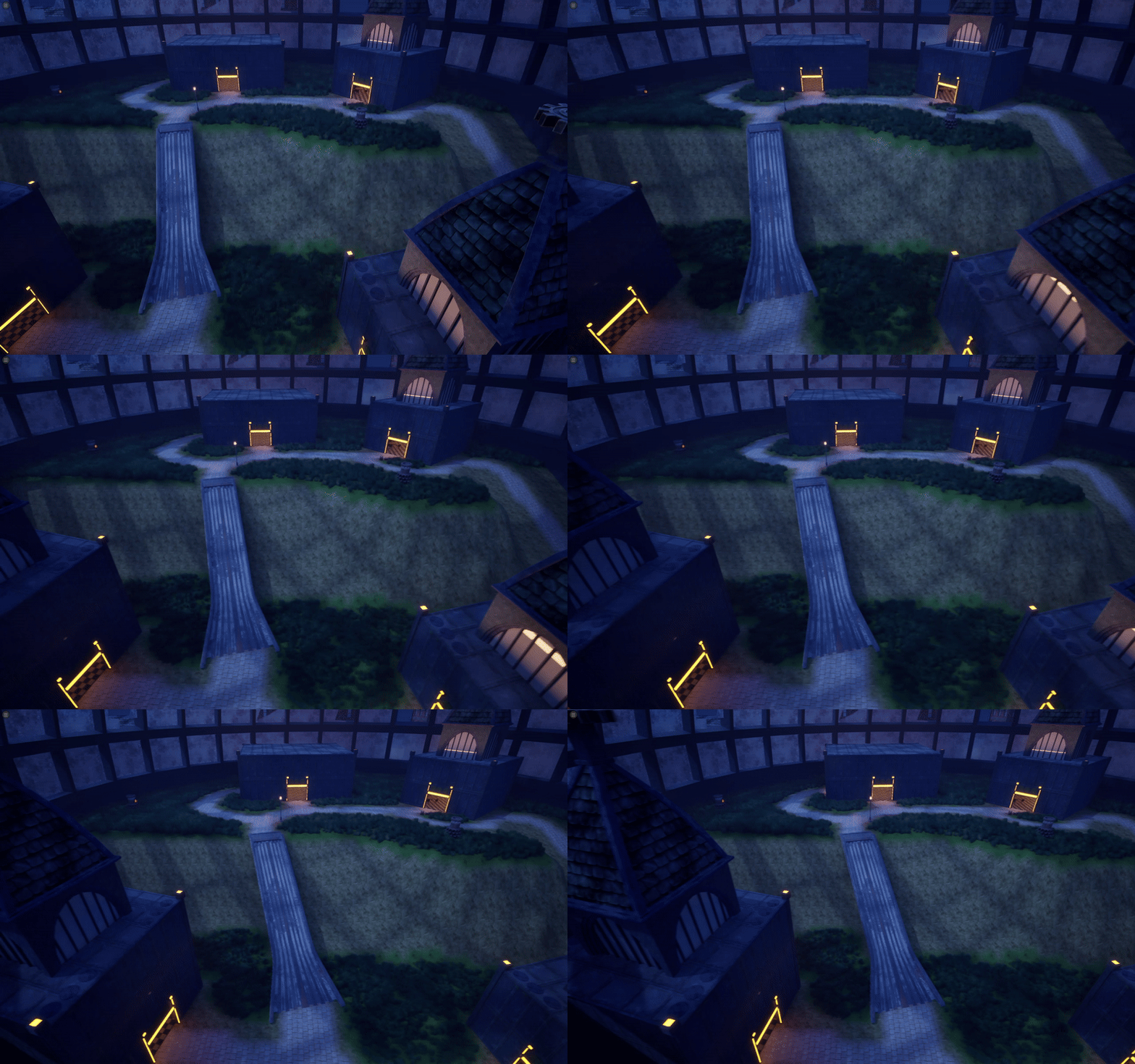
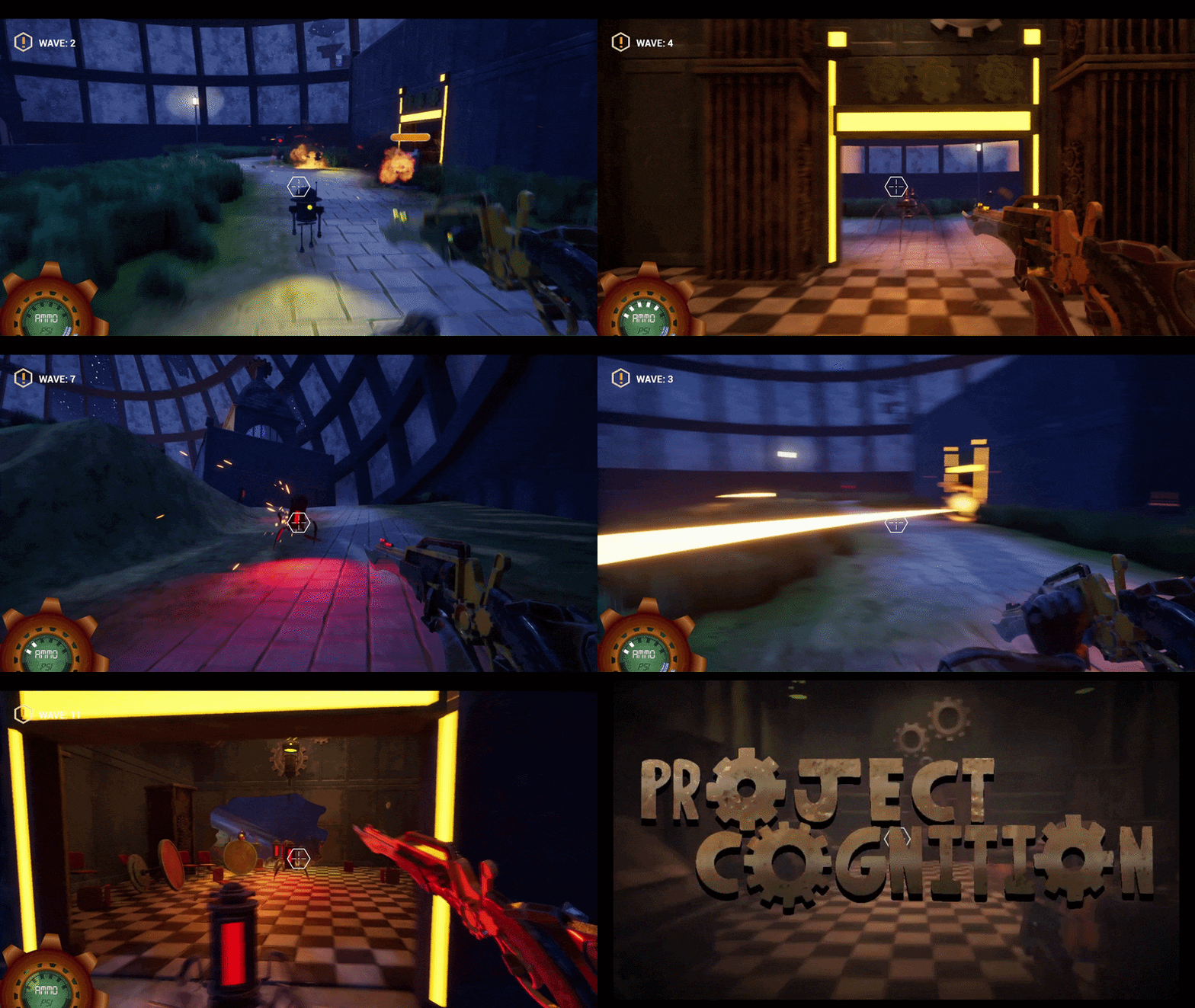
Project Cognition is an FPS, tower defense game developed in Unreal Engine 5. It sees the player, an old security robot, trapped inside the dome in the middle of a full-scale invasion. While working on Project Cognition, I primarily designed levels.

Production
Project Work Summary
While working on Project Cognition, I worked on level design. I created a variety of level layouts for multiple combinations of systems and mechanics for the game. I also assisted with enemy pathing within the level.
Project Summary
The dome has fallen under siege by a corrupted robot army. As the defender of the dome, hold the line as long as you can while activating boilers. Boilers power the main gate to the dome, and all need to be activated to open it.
Featuring dichotomous gameplay that balances fast-paced gunplay and strategic tower defense, fight off hordes of enemies, defend active boilers, and escape the fallen dome.
Role
Team Interactions
As the primary level designer on Project Cognition, I acted as a bridge between the level design process and the art and programming disciplines
When working on level design, asset implementation became a pivotal aspect of my workflow. I collaborated closely with artists to ensure that the game's art direction was inline with the gameplay intent.
While working on encounter design, I collaborated closely with the enemy designer to resolve enemy spawning and pathing issues. I assisted with implementing and updating pathing volumes and spawners as the level evolved
Contributed Work


Level Design Process
When it came to designing/iterating a level layout for Project Cognition, my process could be broken down into six steps:
-
Identify what elements the level needed to include, in order to align the game's experience with the core gameplay pillars
-
Draft concept sketches of the level with these considerations in mind
-
Create a level graybox in engine based on the level sketches
-
Assist enemy designer with enemy pathing volume/spawner placement
-
Test to see if the level prototype successfully aligns the game's experience with the core gameplay pillars. Continue iterating and testing until it does.
-
Collaborate with artists to integrate art assets into the level
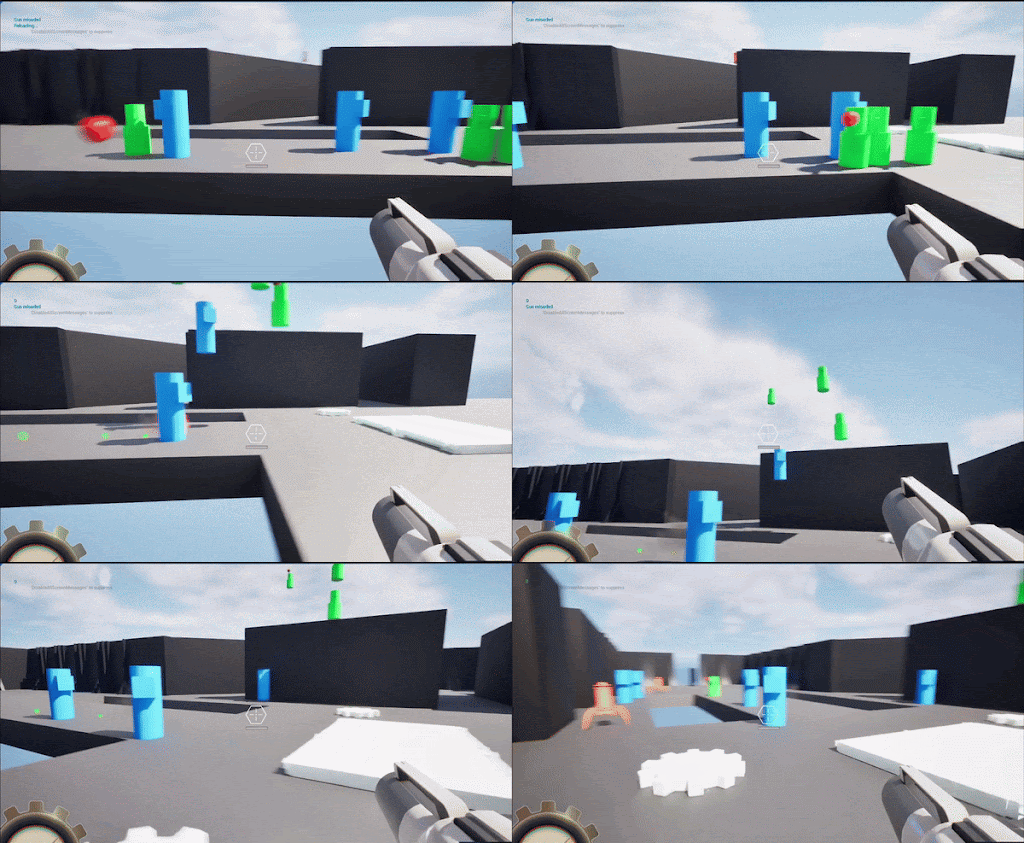
Catering Level Design to Systems/Mechanics
While designing and iterating level layouts for Project Cognition, accounting for multiple systems and mechanics was necessary. During early development, the programmer and systems designer experimented with various combinations of systems and mechanics to create different styles of gameplay.
When a new set of systems and mechanics was provided, I would begin by testing it against enemies, to gauge gameplay feel. If the results aligned with intended player experience, I would begin to plan and implement a level layout.
The layout worked in tandem with the systems and mechanics to create the intended player experience. A strategic experience utilizes tighter hallways and more direct paths, while a combat-focused experience utilizes open areas with less emphasis on objective routes.
Post Mortem
Closing Thoughts
Working on Project Cognition taught me the importance of iteration on a larger scale and the pipelines required to do so successfully.
Iteration was often taught through small solo design projects, but Project Cognition was the first team project where it became essential.
To keep up with Project Cognition's iteration, I streamlined pipelines between disciplines:
Programming introduced new systems and mechanics, which I utilized to design levels that matched the intended player experience. Art delivered new assets, which I then integrated into the level. When enemy design introduced new foes, I refined level layouts to better suit their behaviors.
Project Cognition instilled the basics of interdisciplinary pipelines into my knowledge pool.
Team Shadow Wizard Money Games
.png)
Programmer/Producer: Xavier Olmstead
Environment Artists: Caleb Spainer, Tu Nguyen
Animator: Sam Feiner
Systems Designer: Isaac Eddy
Level Designer: Liam Dunphy
Enemy Designer: Natalie Froelich
UI/UX Designer: Andrew Lounsbury
Sound Designer: Kolby Sawyer