

Villainous Intent
Villainous Intent is a third-person, physics-based party game developed in Unity. It sees a dastardly duo of supervillains infiltrate and rob the house of a retired superhero. While working on Villainous Intent, I primarily designed levels and the physics-based prop system.

Production
Project Work Summary
While working on Villainous Intent, I worked on level design. I created/iterated the level layout for the retired superhero's house. I also developed and implemented a physics-based prop system.
Project Summary
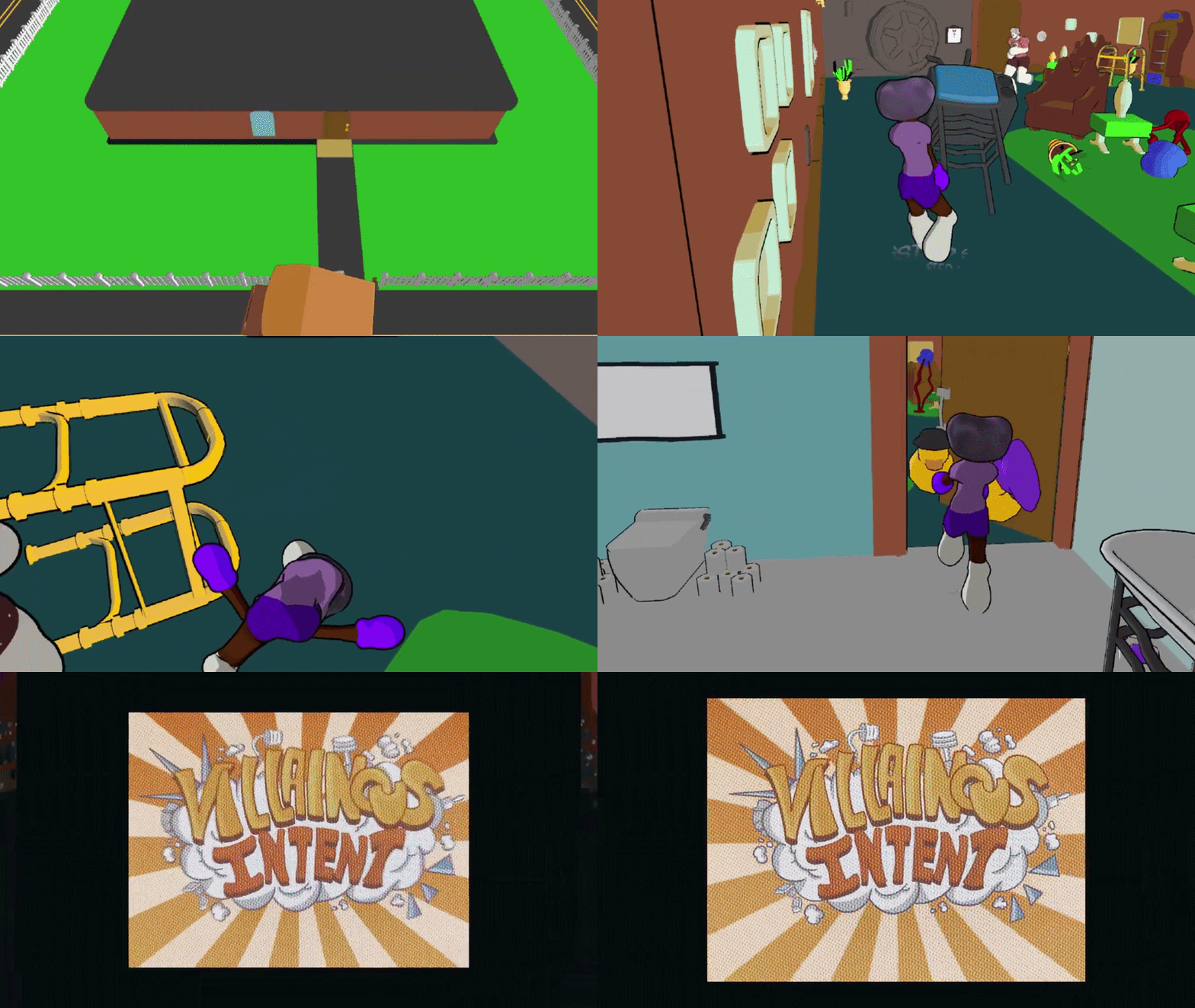
A dastardly duo of supervillains executes a heist on a retired superhero's home to become the most reputable evildoers. Work together to steal anything that isn't bolted to the floor.
Featuring clunky, physics-based gameplay, you'll load up the moving truck with stolen goods while evading the retired superhero. Team up to lead a life of crime and build your reputation in the criminal underworld.
Role
Team Interactions
As the level designer on Villainous Intent, I acted as a bridge between the level design process and the art and programming disciplines.
When working on the physics-based destruction system, I closely collaborated with artists to create props suitable for shattering.
When working on the same system, I collaborated with programmers to ensure proper functionality of the physics-based destruction.
Contributed Work


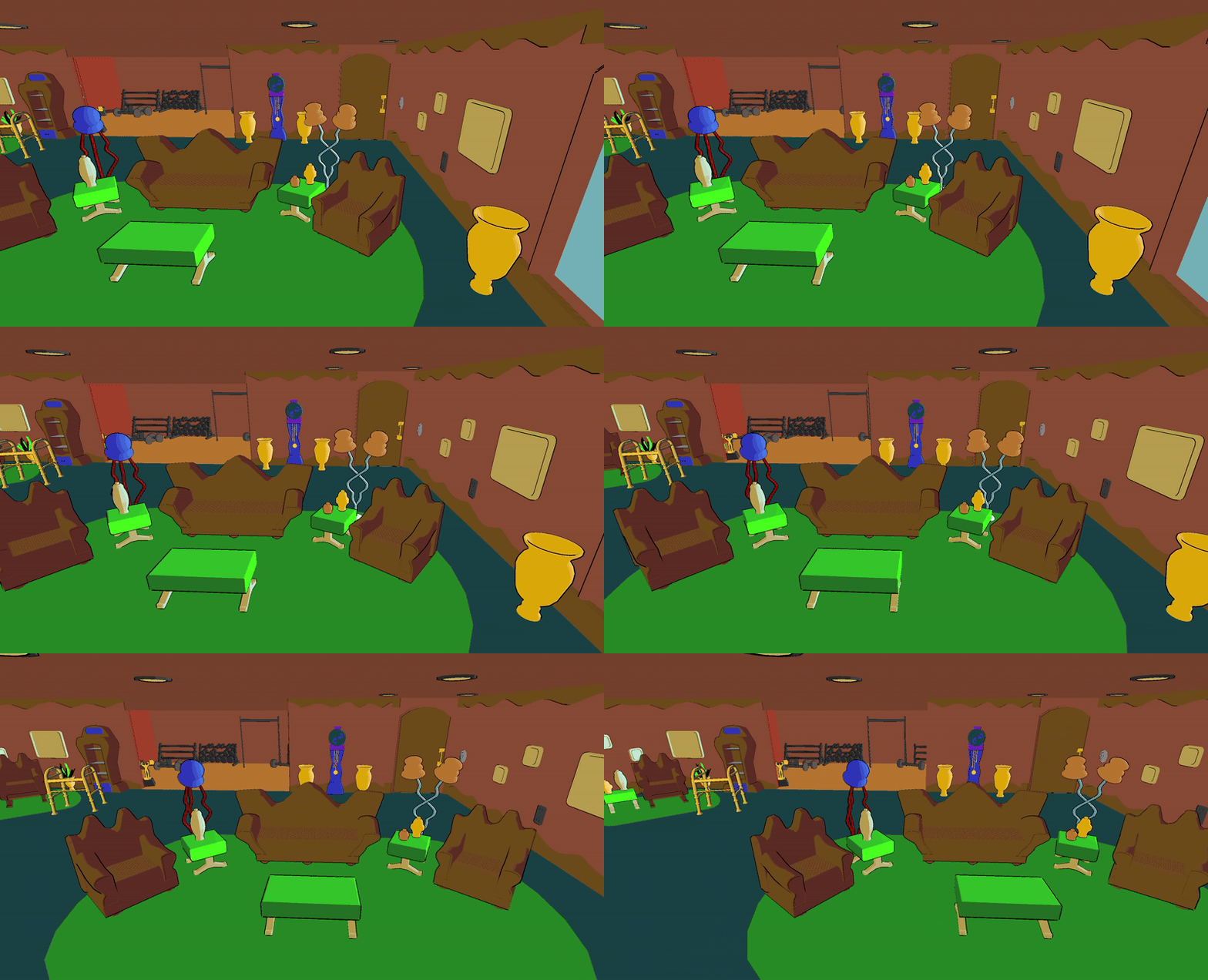
Level Design Process
When it came to designing/iterating a level layout for Villainous Intent, my process could be broken down into six steps:
-
Identify what elements the level needed to include, in order to align the game's experience with the core gameplay pillars.
-
Draft concept sketches of the level with these considerations in mind.
-
Create a level graybox in engine based on the level sketch.
-
Implement physics-based destructible props into the level graybox.
-
Test the level to see if it created a space in which the gameplay highlighted the core gameplay pillars. Continue iterating and testing until it does.
-
Collaborate with artists to integrate art assets into the level
Physics-Based Prop System
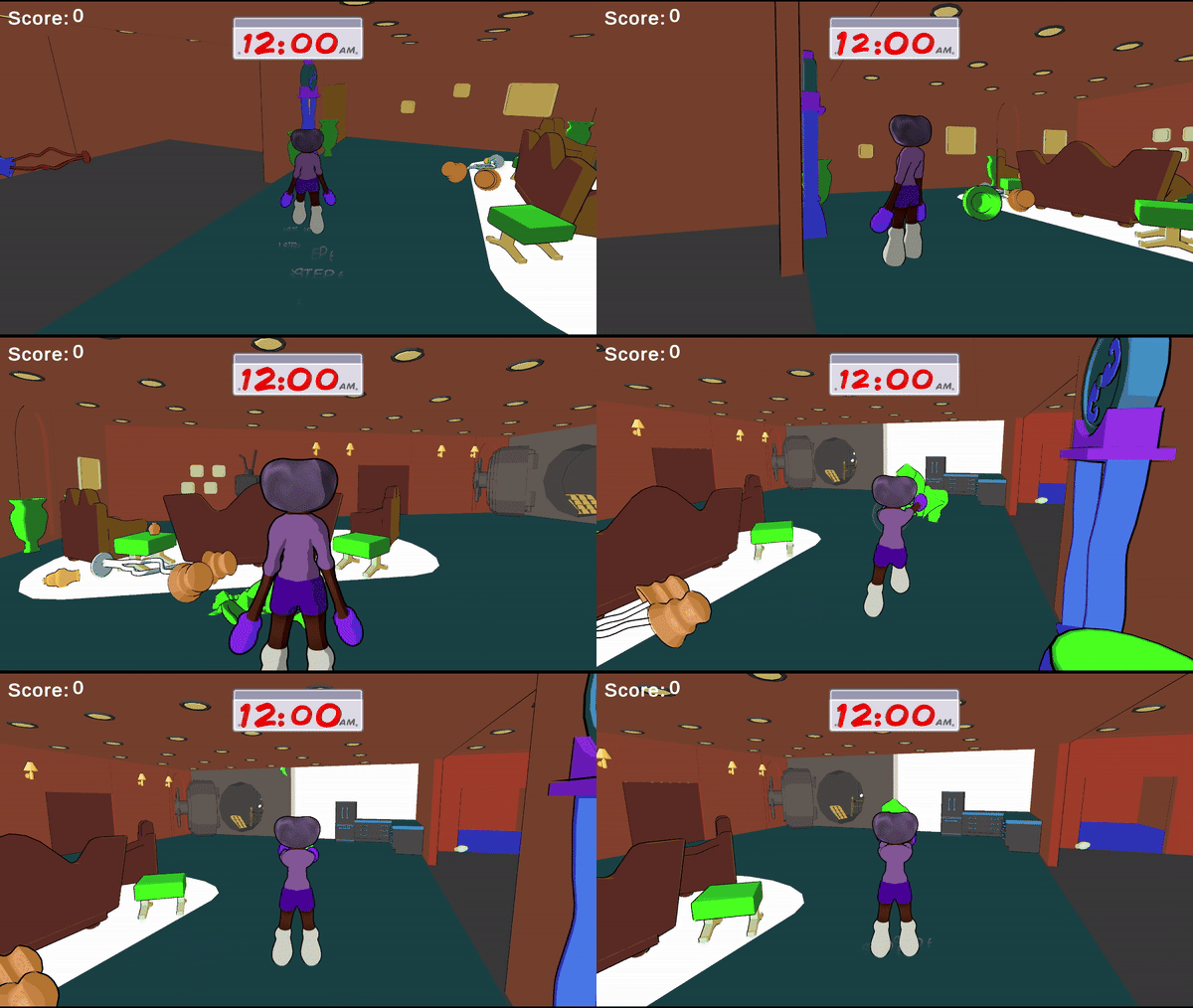
When designing and implementing the physics-based prop system for Villainous Intent, I developed a solid pipeline to get these destructible assets functioning and in-game efficiently.
The process began with receiving assets from the environment artist and determining which props should be destructible. These assets were imported into Blender, where a fracture mesh tool was applied. The fractured meshes were then refined to ensure the destruction feels satisfying.
After fracturing, the normal and fractured models were imported into Unity and integrated into the physics-based destruction system. The system swapped models when sufficient force was applied, with the object's mass determining the required force.
Post Mortem
Closing Thoughts
Working on Villainous Intent taught me the importance of utilizing an agile approach to game development, versus the more waterfall one used for this project.
This project started with a vision of the final product. Due to its large scope, physics-based gameplay and networked multiplayer, reaching a minimum viable product (MVP) was challenging early on. Many sprints passed without a playable game loop because we hadn't clearly define what it would look like.
Not producing an MVP early on should have signaled that the concept's scope was too large for the timeline. Taking a more agile approach, by delivering an MVP each sprint, would have allowed earlier testing and more time for polish.
Team Rotten Eggz

Producer: Eric Cowette
Product Owner, Systems Designer: Isaac Eddy
Level Designer: Liam Dunphy
Generalist Designer: Peter Newman
Environment Artist: Caleb Spainer
Character Artist: Renee Bamford
Physics Programmer: Xavier Olmstead
AI/Gameplay Programmer: Henry Bennett
Sound Designer: Danni Vecchione